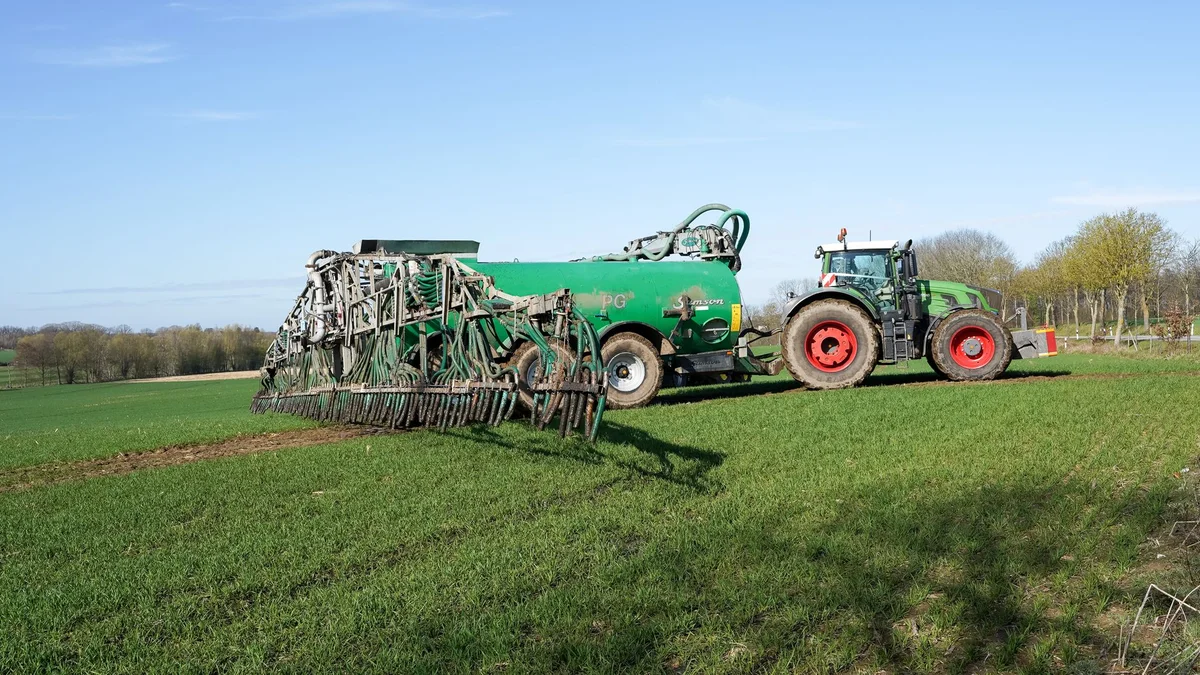
A good lawn fertilizing schedule in Winnipeg has four dates: a first feed in mid-May once the soil hits about 10°C, an optional light feed in late June, a fall feed in the first half of September, and a winterizer in early October. Here is what goes on at each date, what to skip, and the Manitoba rules that apply to your lawn.
Would rather not track dates and spreaders? Lawn fertilizing in Winnipeg is part of our premium plan, and a free quote takes a couple of minutes.
The Winnipeg Lawn Fertilizing Schedule at a Glance
- Mid-May: first spring feed, once soil temperature reaches about 10°C.
- Late June to early July: optional light feed with a slow-release product. Skip it in a dry spell.
- September 1 to 15: fall feed, ideally right after core aeration.
- Early October: winterizer, high in potassium, before the grass goes dormant.
Dates move with the weather. A late snowmelt pushes May back, and an early frost can close the October window by the middle of the month. Go by soil temperature and the forecast, not the calendar alone. If you want the full reasoning behind the number of feeds, read our post on how often to fertilize your lawn.
Spring: The Mid-May Feed
Do not fertilize in April. Winnipeg soil is cold and often still frozen below the surface, so the grass cannot use what you put down and the rain can wash it toward the storm drains. Wait until the ground warms to roughly 10°C, which usually means mid-May. Rake out any snow mould first and let the lawn dry out and firm up.
Use a balanced, slow-release lawn fertilizer. If you also battle dandelions, keep them in mind, because a thick, fed lawn crowds them out and our weed control service handles the ones that get through.
Summer: Go Easy on a Prairie Lawn
July and August are about survival, not growth. Heavy nitrogen in a hot, dry week burns Kentucky bluegrass on our clay soil and pushes soft growth that the heat cannot support. If you feed at all, do it in late June with a slow-release product, and only when the lawn is actively growing or getting regular water. If the lawn has gone dormant and brown, leave it alone and wait for September rain. Keep mowing high with weekly grass cutting, since longer grass shades the soil and holds moisture.
Not sure which of these dates fits your yard? Book a free quote and we will tell you straight.
Fall: The Two Feeds That Matter Most
If you only fertilize twice a year in Manitoba, make it September and October. The September feed, ideally after core aeration and overseeding, helps roots recover from summer stress. The early October winterizer, high in potassium, helps the grass store energy for our long winters and green up faster after the snowmelt.
Timing is tight. Once the grass stops growing, a late application does very little, so aim for the first half of October at the latest. Finish with a final cut around 60 mm and get the leaves off the lawn before snow arrives, because a matted lawn under snow is how snow mould starts. Our spring and fall cleanup packages cover that last step.
Manitoba Rules and Common Mistakes
Manitoba has limited phosphorus in lawn fertilizer since 2009 to protect Lake Winnipeg. According to the province's own brochure, lawn fertilizer cannot contain more than 1 per cent phosphorus by weight unless you are starting a new lawn or a soil test shows you need it. Look for a middle number of zero on the bag, such as 20-0-10. Never apply fertilizer close to a creek, river or retention pond.
Provincial winter nutrient restrictions also run from November 10 to April 10, and they exist because nutrients on frozen or snow-covered ground wash off in the spring melt. They were written with farms in mind, but the rule of thumb is a good one for homeowners too: when the ground freezes, the spreader goes away.
The mistakes we see most on Winnipeg lawns:
- Feeding in April on cold or frozen soil.
- Pushing nitrogen in a July heat wave.
- Skipping the fall feed and then wondering why the lawn is thin in spring.
- Putting down winterizer in late October after the grass has stopped growing.
- Spreading overlapping passes, which leaves yellow or burned stripes.
Lawn Fertilizing Schedule FAQ
When should I start fertilizing my lawn in Winnipeg?
Mid-May, when soil reaches about 10°C. If you missed spring, September is the next best time and is the more important feed for most lawns.
Is it too late to fertilize in October?
Early to mid-October is still fine for a winterizer if the grass is green and growing. Once it goes dormant, hold off until next spring.
Can I fertilize and overseed on the same day?
Yes, in late August or early September. Use a starter fertilizer on new seed, and water daily for two to three weeks.
For a base to build on, our basic lawn care in Winnipeg plan keeps the mowing steady while the schedule above does its work.
Get a Clear Price for Your Winnipeg Yard
No pressure, no runaround. Call 204-900-0438 or request a quote based on your actual property.
Get a Free Quote